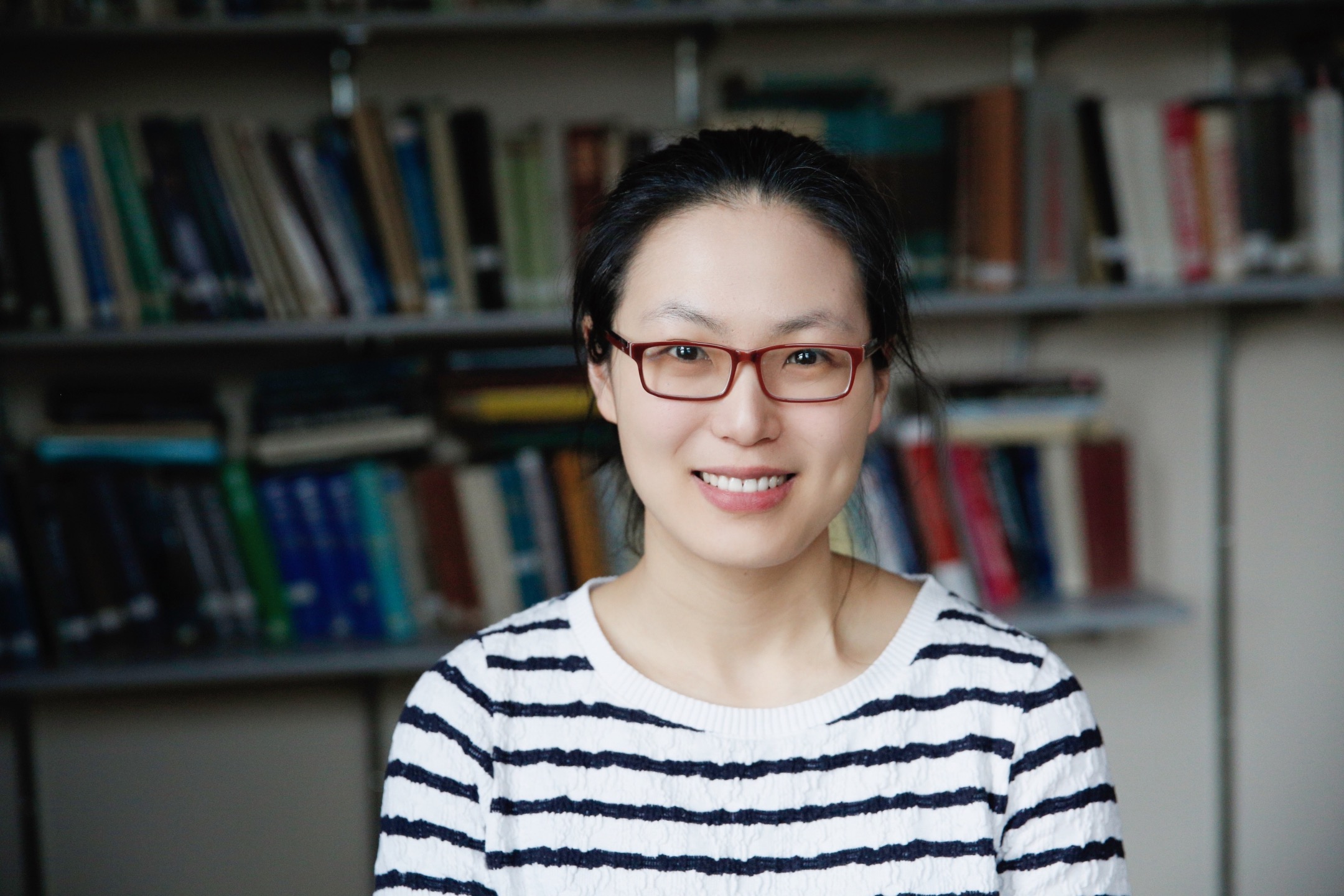

本科于中国科学技术大学毕业后,赴美国北卡罗来那大学教堂山分校 (University of North Carolina at Chapel Hill) 攻读生物统计专业,并于三年后获得博士学位。后赴美国哈佛大学生物统计和流行病系从事博士后研究。在美国明尼苏达大学获得长聘副教授,在首都医科大学获得教授。刘岚教授获得国家高层次人才引进项目。
刘岚教授担任统计顶级期刊Journal of American Statistical Association副主编、医学期刊Journal of American Heart Association客座编辑,Stroke统计主编(statistical editor)。在统计和医学杂志发表论文30余篇,主导过五个国家级的研究项目(其中的一个在当年的NIH基金评审中排名前1%)。
在统计应用上,刘岚教授在美国食品药品监管局(FDA)的CDER部门工作实习,参与了对于缺失数据指导方案前期的探索研究。 在美期间,刘岚教授与医学专家合作,进行实验设计和数据分析,论文发表在多个不同领域医学杂志。同时,刘岚教授和首都医科大学吉训明院士团队长期合作,深度参与了BAOCHE(已发表在NEJM上)、OPENS2, TREND(已发表在JAMA Neurology上), RICH2等大型研究的实验设计和统计分析。 此外,刘岚教授拥有丰富的统计咨询经验,与美国明尼苏达州财政部、劳工部、刑事犯罪局、纽约房屋管理局均有合作项目。
什么是重要的研究?首先,它是要能有影响力的,要么能改变人们对于食物的认知,从而改变medical practice(应用型),或者大家做研究的方式(方法学)。第二,它是要可信的,至少你对你的结果是有信心的。
首先讨论影响力。研究是以研究为导向,而不是论文为导向的。一个研究是一个复杂的项目,研究的中间过程会产生论文。很多人会讨论SCI分区,对于我而言,如果一个研究一开始就是冲着二区的,那么这个研究不做也罢。所有的研究都应该是最终结果能发在一区,甚至是顶刊的。当然,研究过程中为了解决最终问题,会去解决一些小的问题(类似数学中的引理),这些小的步骤是可以作为论文发表在其他期刊上的。为了研究明白,早期我进行了一定摸索,其中会有一些很小的结果,灌水也可以发一区甚至顶刊,这种行为无可厚非,毕竟每个人处境不同,但是我不希望我的研究和我的学生走这条路。
接下来讨论可信。有些学生有个不好的习惯,那就是对一个方法一知半解就改改代码就用了。我在作为统计编辑和审稿人的工作中见得很多,这种行为也很一目了然。所以我希望我的学生能充分理解他们所用的方法,只有这样,他们自己才可能相信自己做的研究。 我希望培养终身型的研究人员。如果不能够做重要的研究,只是为了职称和功利目的,这样的研究是持续不了的,一个人会burn out的。只有做重要的研究,这些研究非功利性的激励才能成为一个研究人员终身的动力。
* indicates student
† indicates corresponding author
When I first started my PhD, I was involved in several projects involving vaccines (1-4). I was amazed to learn that some vaccines like pneumococcal vaccine may have moderate protection on children receiving the vaccine, but they confer more significant protection on the elderly in the family. This cross-protection, is a form of interference, makes vaccine very useful, but also limits the scope of statistical analysis on vaccine. This motivated my theoretical research on statistical anlysis in the presence of interference (5-7).
1. S. Becker-Dreps, E. Amaya, L. Liu, G. Moreno, J. Rocha, R. Brice˜no, J. Alem´an, M.G. Hudgens, C.W. Woods, D.J. Weber, (2014) “Changes in Childhood Pneumonia and Infant Mortality Rates Following Introduction of the 13-valent Pneumococcal Conjugate Vaccine in Nicaragua”, The Pediatric Infectious Diseases Journal, 33(6):637-642.
2. S. Becker-Dreps, M. Mel´endez, L. Liu, L. E. Zambrana, M. Paniagua, D. J. Weber, M. G. Hudgens, M. C´aceres, R. Achi, C. K¨allest˚all, D. R. Morgan, F. Espinoza, R. Pe˜na, (2013) “Community Diarrhea Incidence Before and After Rotavirus Vaccine Introduction in Nicaragua”. The American Journal of Tropical Medicine and Hygiene, 89(2), 246-250.
3. S. Becker-Dreps, F. Bucardo, S. Vilchez, L. E. Zambrana, L. Liu, D. J. Weber, R. Pe˜na, L. Barclay, J. Vinj´e, M. G. Hudgens, J. Nordgren, L. Svensson, D. R. Morgan, F. Espinoza, M. Paniagua, (2014) “Etiology of Childhood Diarrhea Following Rotavirus Vaccine Introduction: A Prospective, Population-based Study in Nicaragua”. The Pediatric Infectious Disease Journal, 33(11), 1156-1163.
4. S. Becker-Dreps, E. Amaya, L. Liu, J. Rocha, R. Brice˜no, G. Moreno, J. Aleman, M. G. Hudgens, C. W. Woods, D. Weber, (2015) “Impact of a combined pediatric and adult pneumococcal immunization program on adult pneumonia incidence and mortality in Nicaragua”. Vaccine, 33(1), 222-227.
5. L. Liu, M. G. Hudgens, “Large Sample Randomization Inference of Causal Effects in the Presence of Interference”, (2014) Journal of the American Statistical Association (JASA) Theory and Methods Section, 109(505):288-301.
7. L. Liu†, M. G. Hudgens, B. Saul, J. Clemens, M. Ali, M. Emch (2018+) “Doubly Robust Estimation in Observational Studies with Interference”, Stat, 8, e214.
8. Liu, Lan, and Eric Tchetgen Tchetgen. "Regression‐based negative control of homophily in dyadic peer effect analysis." Biometrics 78, no. 2 (2022): 668-678.
* indicates student
† indicates corresponding author
I wrapped up my PhD to take a postdoctoral position with Eric Tchetgen Tchetgen. With the help of my advisor Michael Hudgens, I was lucky that I could find and work on a research topic so quickly. However, my PhD training was shorter than usual, so I needed to get exposed to more canonical research methodologies during my post-doc years. I mainly worked on semiparametric methods, in the context of doubly robust estimators, and instrumental variable.
1. B. Sun, L. Liu, J. M. Robins, E. Tchetgen Tchetgen (2018) “Doubly Robust Instrumental Variable Estimation in Missing not at Random Problems, Statistica Sinica, 28, 1965-1983.
2. L. Liu, W. Miao, B. Sun, J. M. Robins, E. Tchetgen Tchetgen (2020) “Instrumental Variable Estimation of the Marginal Effect of Treatment on the Treated, Statistica Sinica, 30, 1517-1541.
3. W. Li*, Y. Gu, L. Liu† (2020) “Demystifying a Class of Multiple Robust Estimators”, Biometrika, 207, 919-933.
4. Z. Sun*, L. Liu† “Semiparametric Inference with Missing Not at Random Confounders”, in press at Statistica Sinica.
5. Miao, Wang, Lan Liu, Yilin Li, Eric J. Tchetgen Tchetgen, and Zhi Geng. "Identification and semiparametric efficiency theory of nonignorable missing data with a shadow variable." ACM/JMS Journal of Data Science 1, no. 2 (2024): 1-23.
/